 Blog
E-Commerce Seller Business Project
Introduction
The development of online shopping gave a lot of opportunities to entrepreneurs, retailers, and companies willing to sell products online. An E-Commerce seller business project creates an online business platform for sellers, customers, and marketplace owners. OpenDevSol provides the E-Commerce seller business project involving two business models – a multi-seller e-commerce marketplace and a standalone seller store. Depending on the client’s needs, these two options are considered for developing the online platform for different business niches.
What Is an E-Commerce Seller Business Project?
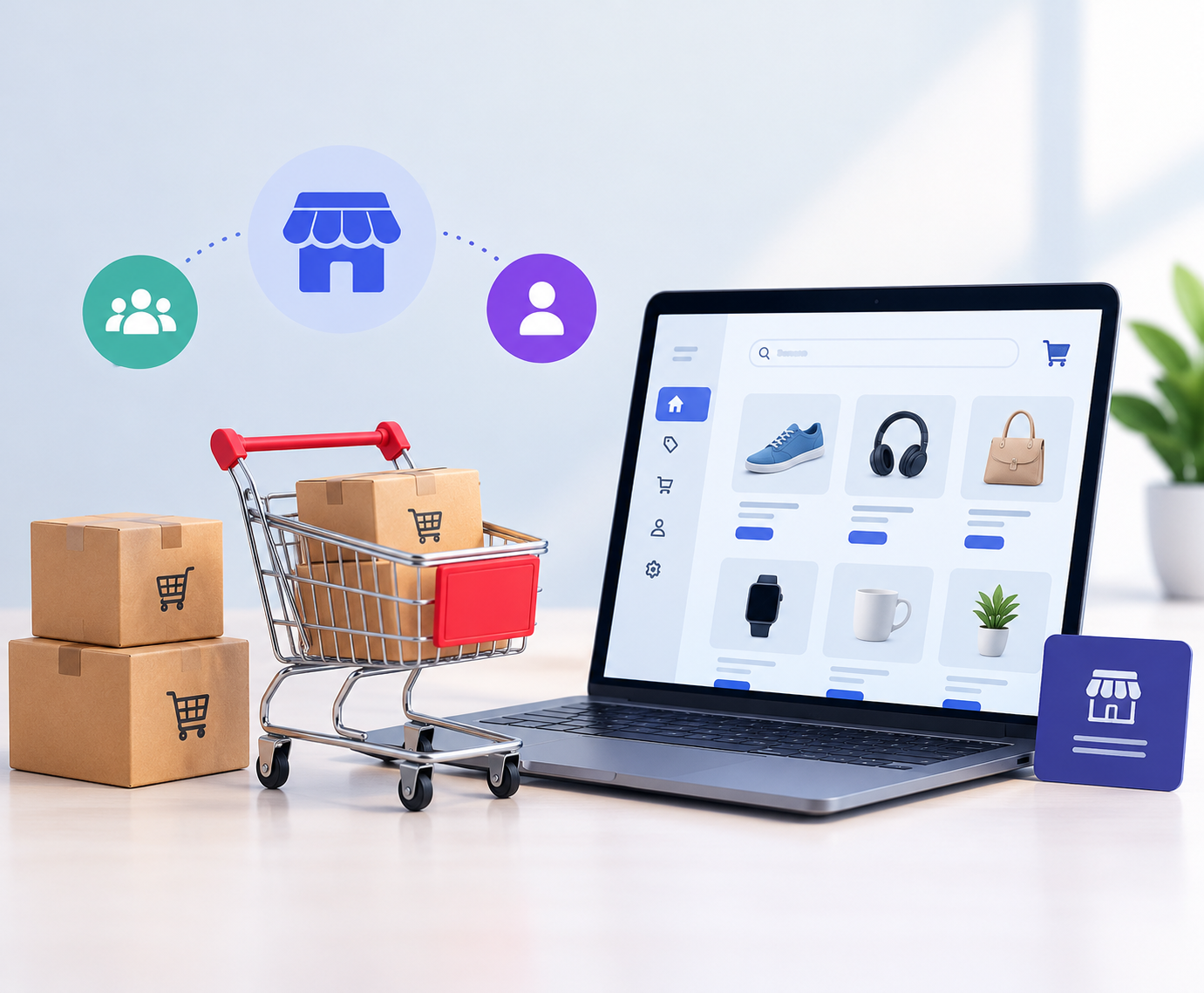
E-commerce seller business project is a business concept involving online product listings, customer shopping, and order management. With the given option, either multiple independent sellers or a single seller can vend products online using either a shared marketplace or standalone store. An E-Commerce marketplace generally involves product listings and descriptions, product images, pricing, and an order management system. While the given marketplace project involves a seller portal, the marketplace owner administers the online business platform. Using the OpenDevSol project, a client can identify a seller-based marketplace business plan for their business needs and project requirements.
Two Ways to Operate Your Business
According to the OpenDevSol E-Commerce seller business project, the owner can choose between two business models for their online selling platform.
1. Multi-Seller E-Commerce Marketplace
A multi-vendor e-commerce marketplace involves multiple independent sellers who can list their products on the shared business platform. In this case, the marketplace owner is responsible for the overall business operations, while the online marketplace is the place where sellers list their products and customers browse and shop online. Such business models can be considered for entrepreneurs willing to develop an online marketplace platform, existing retailers looking to sell products online, or a business owner willing to provide an e-commerce platform for sellers. The key advantages involve the ability to operate multiple sellers, a shared product catalogue of multiple sellers, and ownership control over the marketplace. Besides, the given marketplace can attract the attention of retailers, brands, manufacturers, and distributors. Additionally, the marketplace owner can generate revenue from the given concept using different methods.
2. Standalone Seller Store
A standalone seller store involves an independent online store for a single seller. In this case, the business owner can sell their products online directly without any other marketplace owners or sellers. Such an option can be considered for a retailer, product-based business, or an entrepreneur willing to sell their products online. A standalone seller store is the best option for cases when a business owner wants to create a standalone selling platform rather than a shared marketplace for multiple sellers.
What Are the Features of an E-Commerce Marketplace?
An e-commerce marketplace is a complex concept which involves multiple components regarding the online sales of products. Generally, an E-Commerce marketplace involves the following features:
• Seller Dashboard and Product Management
Using the given OpenDevSol project, an online marketplace owner can provide the necessary tools for approved sellers to add or edit the product listings, edit product descriptions and images, update the seller profile data, and track the order status. Depending on the final configuration, different options can be provided.
• Product Catalogue and Categories
An E-Commerce marketplace generally involves a product catalogue featuring multiple categories for customers to browse through the available products. In this regard, electronics, fashion, home appliances, and other goods, or services, can be offered depending on the project configuration.
• Customer Shopping and Order
In general, the online marketplace involves the necessary tools for customers to browse through the different products, compare them, select one or more items, and complete their order on the given online platform. In this regard, the necessary information should be provided so that the customers know how they can purchase the given products.
• Marketplace Administration
As an E-commerce marketplace owner, one should provide comprehensive guidelines regarding the seller approval, product quality, payment processing, delivery service, returns, and customer support policies.
How Can an Online Marketplace Make Money?
Depending on the target audience and the operating costs, a multi-seller online marketplace can incorporate the different revenue streams. For instance, the E-Commerce marketplace can involve a sales commission, i.e., a percentage from every completed sale, or subscription plans for the marketplace sellers. In addition, product listing fees or sponsored product placements can be considered. However, the given revenue streams are only possible if the marketplace owner provides the necessary guidelines and regulations for the sellers and customers. The overall revenue model should be defined by the marketplace owner, considering the operating costs and expected profit.
How Can I Successfully Launch My E-Commerce Seller Business?
In order to successfully launch an E-commerce business, one should develop a proper launch plan for the online marketplace. Firstly, the project options and requirements should be defined in order to choose between a multi-seller or standalone seller business model. In this regard, the following factors should be considered: ownership and features, required functions and access rights, and technical specifications. Then, depending on the selected business model, the seller-based online marketplace or standalone seller store should be configured. In this case, product-based or service-based offerings, seller onboarding, and policies should be defined. Next, the target audience should be identified, and potential sellers can be invited and onboarded to the online marketplace. In this regard, the appropriate instructions and guidelines should be provided to the given sellers. After that, the online store or marketplace should be tested in terms of product listings, order management, payment processing, delivery service, and customer support. Finally, marketing strategies can be developed and implemented in order to reach the target audience. A proper launch strategy is required in order to successfully implement the project.
Why Should I Choose OpenDevSol’s E-Commerce Seller Business Project?
OpenDevSol provides the E-Commerce seller business project, which serves as a basis for entrepreneurs and business owners willing to explore the options of online marketplace ownership or independent online selling. Given the overall business concept, OpenDevSol provides an option for a multi-seller marketplace or standalone seller store. In this regard, the potential client should define their needs and discuss the given requirements and guidelines with the project provider in order to obtain the final configuration. Before the final implementation, the ownership, source files, features, and functions, and other specifications should be discussed with the given project provider.
FAQs
1. What is a Multi-Seller E-Commerce Marketplace?
A multi-seller E-Commerce marketplace is an online platform which provides multiple independent sellers with the opportunity to list their products online. In this regard, the online marketplace owner generally provides the necessary functions for both sellers and customers.
2. Can I Get a Separate Online Store for My Products?
In this regard, the OpenDevSol project provides a standalone seller store option for an independent seller who wants to vend their products online exclusively. In this regard, the client should define the final configuration and the required features.
3. How Does an E-Commerce Marketplace Owner Make Money Out of It?
An E-Commerce marketplace owner can make money out of an online marketplace using different methods. In this regard, the online marketplace owner can set a percentage of the total sales, subscription plans for the marketplace sellers, additional product listing fees, and sponsored product placements. The overall revenue model depends on the target audience and the operating costs.
4. What Are the Features That an E-Commerce Seller Platform Should Have?
Generally, a seller-based online platform should involve a product listing and description, product categories, seller profile and product image, order placement, and online customer service. The given functions are not limited to the given options, and the final features and functions depend on the project configuration.
5. Is e-commerce legal in Pakistan?
Yes, the e-commerce is totally legal in Pakistan and regulated by national and provincial laws.
Conclusion
An e-commerce seller business project can provide a starting point for entrepreneurs who want to explore online selling through a shared marketplace or a separate seller store. The right model depends on your products, target audience, operational capacity, and long-term business objectives. With its two operating options, the OpenDevSol E-Commerce Seller Business Project offers a concept to discuss for marketplace ownership or independent online selling. Define your requirements, clarify the scope of the project, and prepare the strategy for launching the product to market before taking any other steps.
Are you excited to find out about the scope of the project for your e-commerce business idea? Contact OpenDevSol for an initial discussion about the project’s scope, your ownership options, features, and launch requirements.
Website: https://opendevsol.com
Email: info@opendevsol.com
Phone: +92 311 43 33 373