 Blog
Mall Management System – A Complete Solution for Modern Building Operations
Introduction:
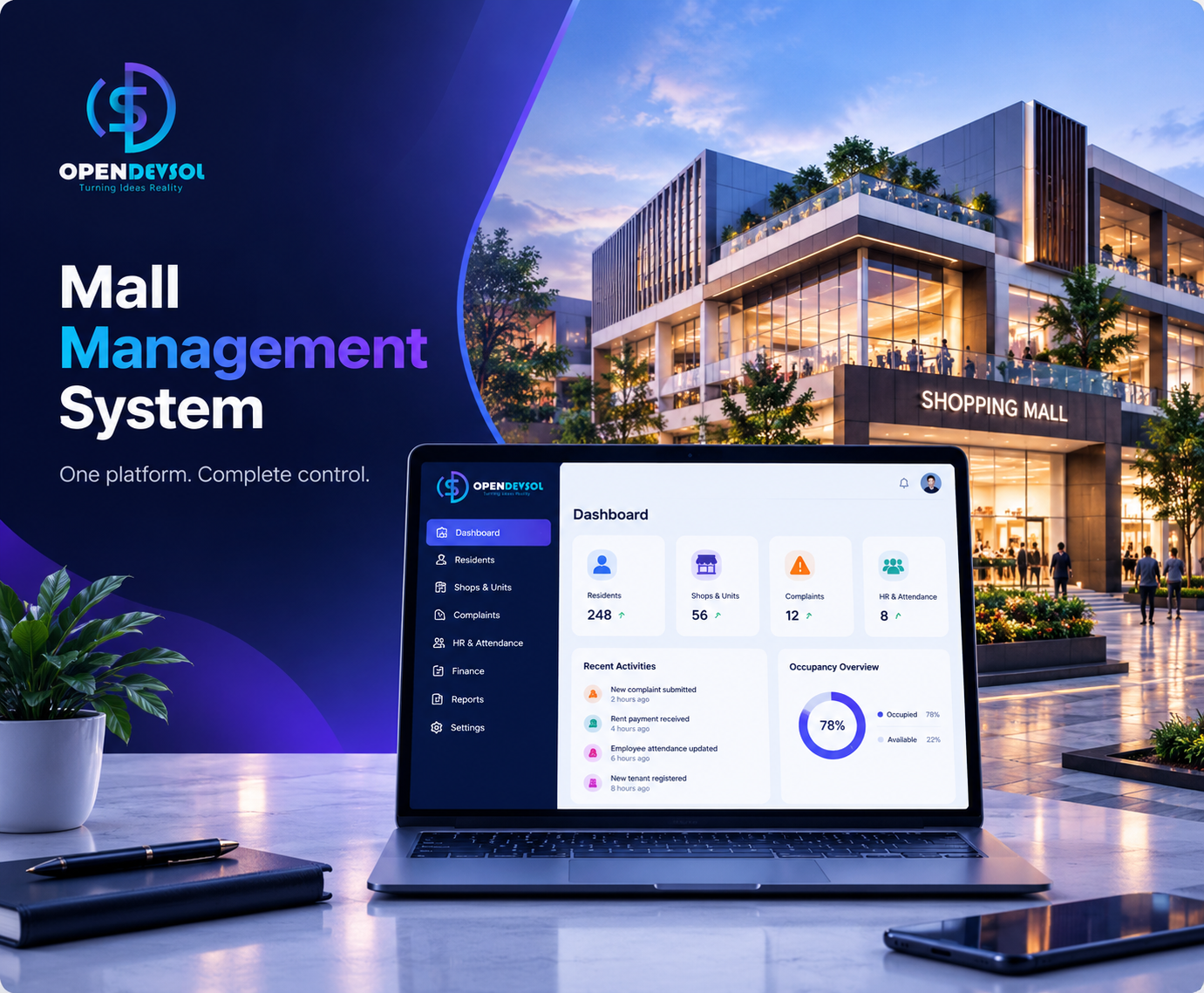
Managing a modern mall or multipurpose building means you will have to manage your residents, tenants, shops, employees, maintenance, rental payments, complaints and daily expenses. If you manage these using individual records, phone calls and personal messengers, it can become difficult to keep track of these. A Mall Management System can help you manage all of these elements in one centralised location. You can easily manage your residential and commercial areas, complain to the right departments, keep employee records, and keep track of your overall performance. OpenDevSol can help you manage your mall using a centralised system. This will help keep your residents, departments, employees, HR, finance and owners all in one flow to help keep your records organised.
What is a Mall Management System?
A Mall Management System is a digital system that can help manage the operations of your mall, commercial building or property with multiple departments and units. Using a centralised system, you can manage all of these elements. Depending on what modules you have set up, you can manage your residents, complaints, shop rentals, food court records, employee attendance, salary information, rental payments, expenses and owner reporting. If you have a resident who has a problem with their electricity, you can link the complaint to the right area and department. The manager can then review the complaint, assign an employee and track the progress whilst the resident reviews the resolution. This makes managing your day-to-day operations much more structured.
Why do modern buildings need Mall Management software?
Managing different areas of your building without a centralised system can cause issues. Residents may not know which department to contact; managers can struggle to see who is responsible for the complaint, and financial information could be split between different records.
Using a Mall Management system can help with this.
Some key issues that can occur:
-
Phone calls and WhatsApp messages can cause confusion with keeping track of complaints.
-
Not knowing who is responsible for complaints.
-
Employees may have their information split between different records.
-
Rental tracking may be difficult to manage.
-
Owners may not have enough visibility of their income, expenses, outstanding payments and running costs.
Using a centralised Mall Management system can help create a structured base for your operations.
Key Features
1. Residential Management
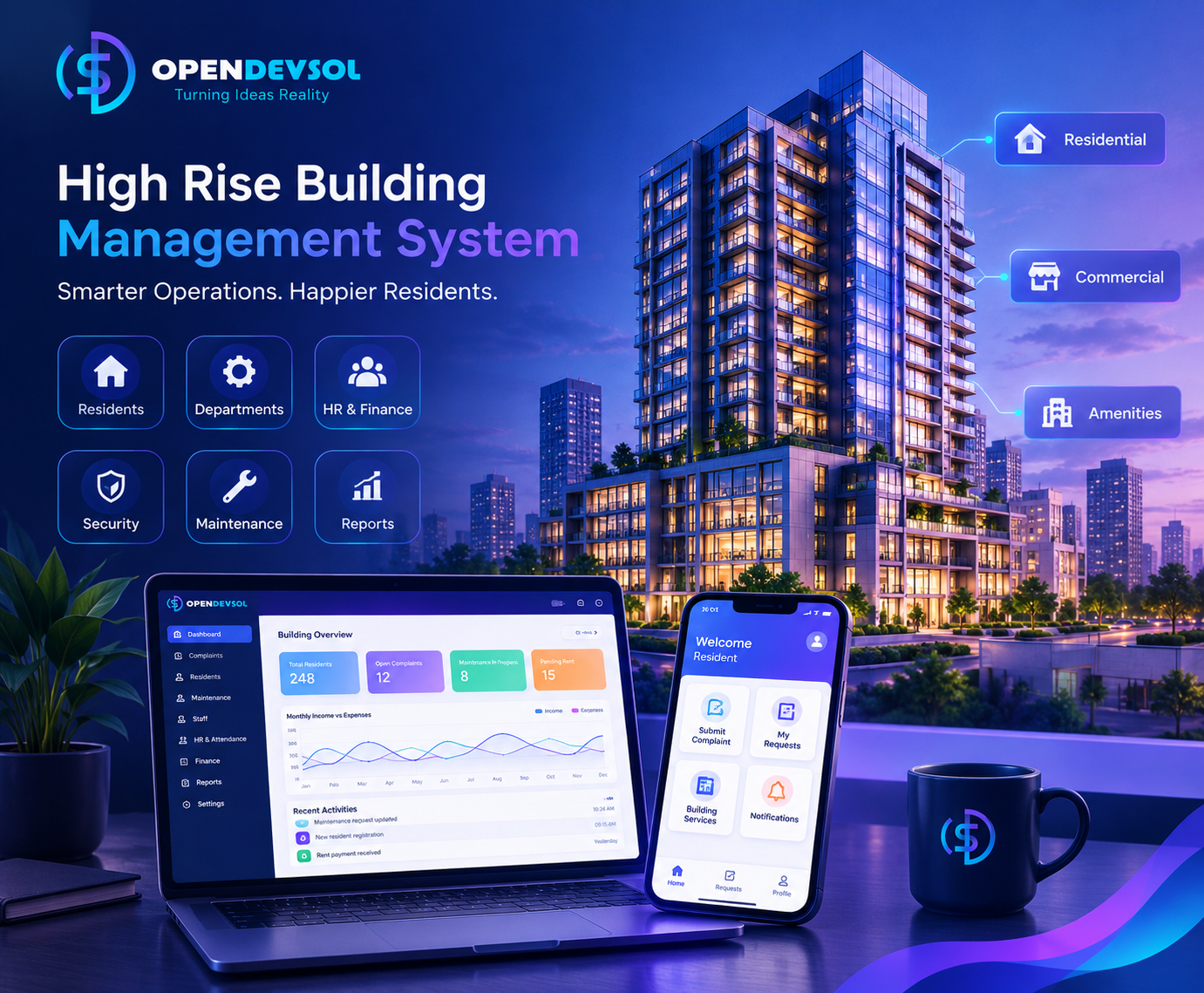
Managing residential areas can be done by creating records for your apartments/houses, residents and tenants. A residential management module can help link the right information to your residents. When new residents move in, authorised users can create a record and link the resident to their apartment or house. They can then be given access to the relevant services. This can help you easily identify where the complaint is from and keep all of your property and service information in one place.
2. Commercial Property Management
Managing commercial property can help you manage your shops, business units, tenant information and rental records. A leasing department can help manage shop/units, tenant information and rental records. This will give you a clearer insight into your commercial areas.
You can also use this to keep track of your rental payments. The shop/unit information can be linked to your income. This can help property owners/managers easily see your rental information.
3. Food Court Management
Managing food courts can involve lots of different outlets. You can use a food court module to help authorised users register their outlets, keep track of their food areas and add/edit/delete records. This can help you keep a more organised overview.
4. Complaint and Maintenance Management
One of the most important aspects of managing your building on a daily basis is managing complaints and maintenance. A complaints management system can help residents select which service they are having an issue with, where it is and what the issue is. They can also add a photo if needed. This can be sent to the right department. For example, maintenance, electricity, water, security, networking or generators. The manager will then review the complaint and assign an employee. The employee will be given all the relevant details. This includes what the problem is, where it is, resident information and evidence.
The complaint can then go through stages:
New > In Progress > Resolved > Resident Review and Close
This can help you keep track of any outstanding issues and help staff understand the problem before they attend. The communication and complaints can be easily tracked.
5. Human Resources and Employee Management
A Mall will need employees working across numerous departments. Using a human resource module can help manage this. You can manage:
-
Recruitment and employee management.
-
Employee profiles, roles and assignments.
-
Daily attendance.
-
Leave requests.
-
Salary management and digital salary slips.
Depending on your setup, attendance machines can be integrated to help keep track of employees. Having a centralised human resource management system can help reduce repetitive tasks and give authorised users a clearer insight into their employees.
6. Rent, Income and Expenses
It is important to manage your finances to understand how your mall or commercial building are performing. Your income can be from shop rentals, service charges and other rental/service charges. Your expenses can be from salary, maintenance, repairs, electricity, water, security, cleaning and vendor payments. Using a centralised finance module can help you manage your records. Some key features include:
-
Shop rental payments.
-
Payment history.
-
Service income.
-
Operation expenses.
-
Outstanding receivables/payables.
-
Monthly financial overview.
Having a centralised place to manage your income and expenses can help you create clearer reports.
7. Owner Dashboard
Property owners often need a clearer insight into how their building is performing.
An owner dashboard can help you manage important information. Depending on your records and dashboard setup, you can manage your overall income, expenses, profit, outstanding rental payments, employee costs, maintenance and monthly trends. This can help you understand how your rental payments are coming in, how much your running costs are and understand your overall financial position. A centralised dashboard can help you communicate with your operation team.
How does a Mall Management System work?
Using a connected system can help you manage your operations.
Register Users and Properties – authorised users can register your residents, employees, apartments, houses, shops and units.
Receive Requests – residents can make a complaint. They can select what service they are having an issue with and where.
Assign – The right department will receive the complaint. The manager will assign an employee.
Communication and Resolution – The employee will review the issue and communicate via the system. They will then complete the required actions.
Update – The complaint will be updated, and the resident will review the resolution.
Manage Human Resources and Finance – The relevant teams will update the employee records. This includes attendance, leave, salary, rental, payments and expenses.
Review – Owners and authorised managers can review the reports and dashboard.
This will help you manage your services, employees and finances in a structured way.
Benefits of using OpenDevSol’s Mall Management System
OpenDevSol’s Mall Management System can help you connect your main operations. This is done using centralised records and roles.
Some key benefits include:
Increased accountability
Complaints can be seen, which department is responsible and who has been assigned.
Communication is organised
Communication is linked to the complaint.
Improved service
Employees can review the details and location of the issue.
Centralised employee information
HR can manage attendance, leave and salary.
Improved financial tracking
Rental income, outstanding payments and running costs can be reviewed.
Improved owner visibility
Dashboards can give you an overview.
Overall, this can help you connect your building operations. This is done by managing residential, commercial, food court, HR and finance in one place.
Who can use a Mall Management System?
A Mall Management System can help organisations that need to manage multiple properties, departments and operations. Some examples of who can use this include:
-
Shopping Malls
-
Mixed Use Buildings
-
Property Management Companies
-
Resident Communities with Maintenance Departments
-
Commercial Property Owners and Leasing Teams
-
Building Administrators
Depending on the size of your property, operations, user roles and management needs, you can choose the best setup for you.
Why choose OpenDevSol?
We specialise in connecting your building operations using a centralised management system. Our Mall Management System can help you manage your residents, departments, HR, finance and owners in one place. We have designed this to help manage your complaints, employee information, leasing and finance using clearly defined roles. This will help you manage your operations in a more structured way. Before setting up, owners can decide what modules they require, what user permissions they want and how they would like their current operations set up.
FAQs
1. What is the main purpose of a Mall Management System?
To help manage your building operations in one place. This can include your resident services, complaints, leasing, employees, rental payments, expenses and owner reporting.
2. Can I manage my residential and commercial areas?
Yes! Using a centralised system, you can manage your residential properties and commercial units. This can be done using different modules and linking the relevant records.
3. How do complaints work?
Residents can make a complaint. They can select what service they are having an issue with, where the issue is and what the problem is. The relevant department will receive the complaint. The manager will assign an employee, and the complaint will be processed.
4. Can I track my rental payments?
Yes! The finance module can help you manage your rental income, outstanding payments, service charges, salary, maintenance costs and other running costs.
5. Can I manage my HR?
Yes! This can include recruitment, employee records, attendance, leave, salary and salary slips. Attendance machines can also be integrated depending on your setup.
Conclusion
Managing your mall or multipurpose building can involve managing your residents, commercial tenants, departments, employees and financial teams. If your information is split between different platforms, it can become harder to track who is responsible and review your performance. A Mall Management System can help you manage all of this in one place. This can include your resident complaints, commercial leasing, HR, rental tracking, expenses and owner dashboards. OpenDevSol’s Mall Management System can help you connect your operations. This can be done using clearly defined roles. This will help your management team keep their records organised. Get your building operations organised by contacting OpenDevSol. We can help you with your Mall Management needs.
Website: https://opendevsol.com
Email: info@opendevsol.com
Phone: +92 311 43 33 373